

When homeowners begin to struggle with mortgage payments, they may start hearing terms such as short sale and foreclosure. While both situations involve financial hardship and the potential loss of a home, they are very different processes with different long term consequences.
Understanding the difference between a short sale and foreclosure can help homeowners make informed decisions that may protect their credit, financial future, and peace of mind.
What Is a Foreclosure?
Foreclosure is a legal process that allows a lender to take ownership of a property when a homeowner stops making mortgage payments. If the borrower fails to resolve the missed payments, the lender can initiate foreclosure proceedings through the court system.
Once the foreclosure process is completed, the lender may sell the property at auction or take ownership of the home as a bank owned property.
Foreclosure can have serious financial and personal consequences. In addition to losing the home, homeowners may experience long term damage to their credit and difficulty obtaining loans in the future.
What Is a Short Sale?
A short sale occurs when a homeowner sells the property for less than the remaining balance on the mortgage, with the lender's approval. The lender agrees to accept the sale price even though it does not fully cover the loan.
This option is often used when the homeowner can no longer afford the mortgage and the property's market value has dropped below the amount owed.
While a short sale still affects a homeowner's credit, it is generally considered less damaging than a foreclosure and may provide a more controlled way to resolve mortgage debt.
Main Differences Between a Short Sale and Foreclosure
Although both outcomes involve financial hardship, the processes and consequences are quite different.
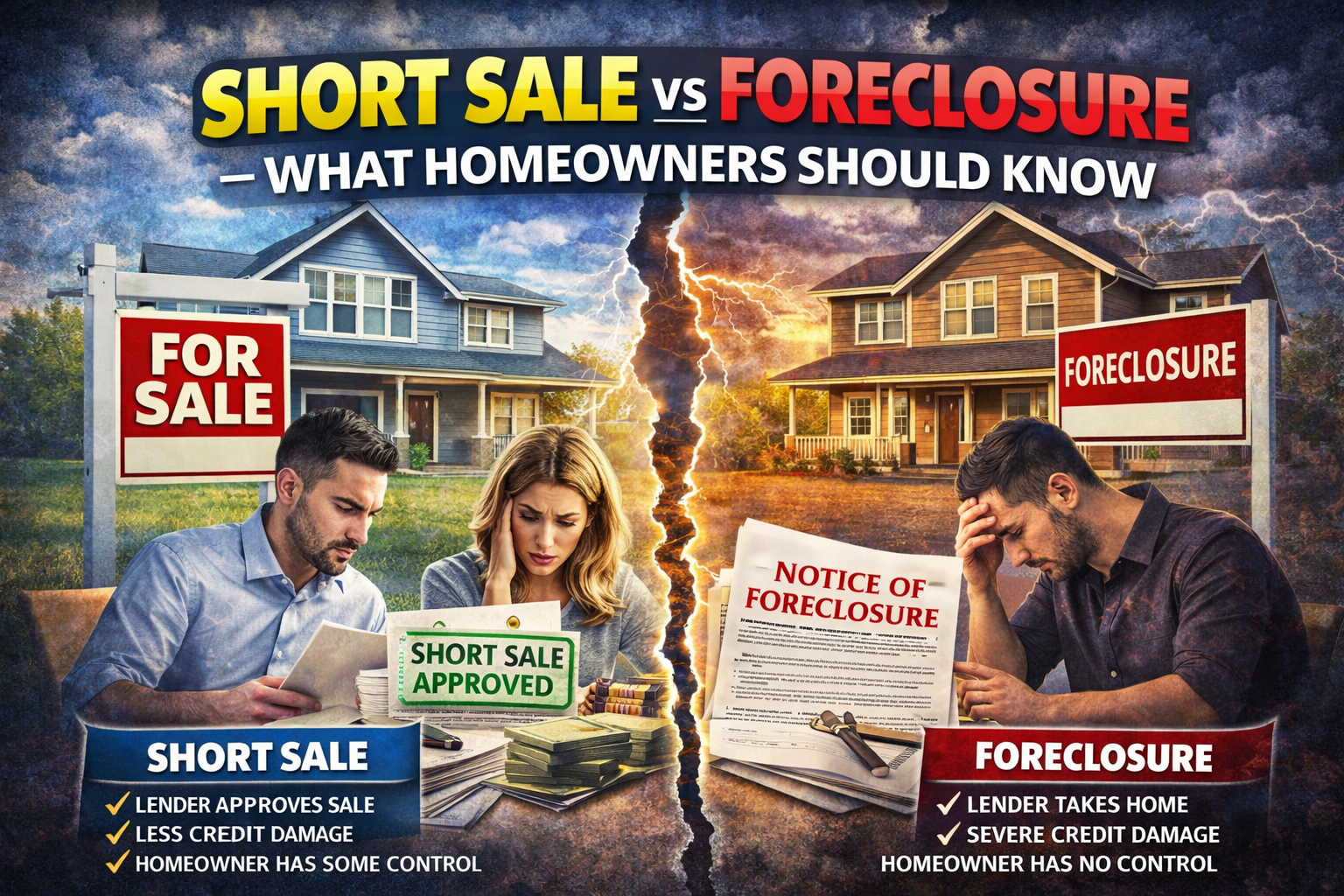
- Control of the process: In a short sale, the homeowner actively works with the lender and a real estate agent to sell the property. In a foreclosure, the lender takes control of the property through legal action.
- Credit impact: A foreclosure typically causes more severe damage to a credit score and can remain on a credit report for up to seven years.
- Future home buying: Homeowners who go through a short sale may qualify for a new mortgage sooner than those who experience foreclosure.
- Emotional stress: A short sale often allows homeowners to leave the situation with more dignity and control compared to the forced process of foreclosure.
How a Short Sale Works
The short sale process usually begins when a homeowner contacts their lender and explains their financial hardship. The lender may request documentation such as income records, financial statements, and a hardship letter.
Once approved, the homeowner works with a real estate agent to list the property for sale. When a buyer makes an offer, the lender reviews the offer and decides whether to accept the reduced payoff amount.
This process can take several months because the lender must carefully evaluate the financial details of the transaction.
Consequences of Foreclosure
Foreclosure often leads to several long term consequences beyond losing the home.
- Significant damage to credit score
- Difficulty qualifying for new loans
- Potential deficiency judgments depending on state laws
- Emotional stress and financial instability
- Disqualifying Employment opportunities
Because of these impacts, many homeowners try to explore alternatives before foreclosure occurs.
Benefits of Considering a Short Sale
While a short sale is not ideal, it can offer several advantages compared to foreclosure.
- Less severe impact on credit
- Greater control over the timing of the move
- Ability to work cooperatively with the lender
- Potential to qualify for a future mortgage sooner in a shorter period than a foreclosure.
In many situations, lenders also prefer short sales because they help avoid the time and expense of foreclosure proceedings.
When to Consider Your Options
If you are struggling with mortgage payments, it is important to act early. Waiting too long can limit the available options and increase the risk of foreclosure.
Homeowners experiencing financial hardship should consider speaking with a housing counselor, financial advisor, or real estate professional to understand all available solutions.
Final Thoughts
Both short sales and foreclosures are difficult situations for homeowners, but they are not the same. A short sale often provides a more manageable path for resolving mortgage debt while protecting credit and financial stability.
By understanding the differences between these options and seeking professional guidance early, homeowners can make informed decisions that help protect their future.
Check out this article next